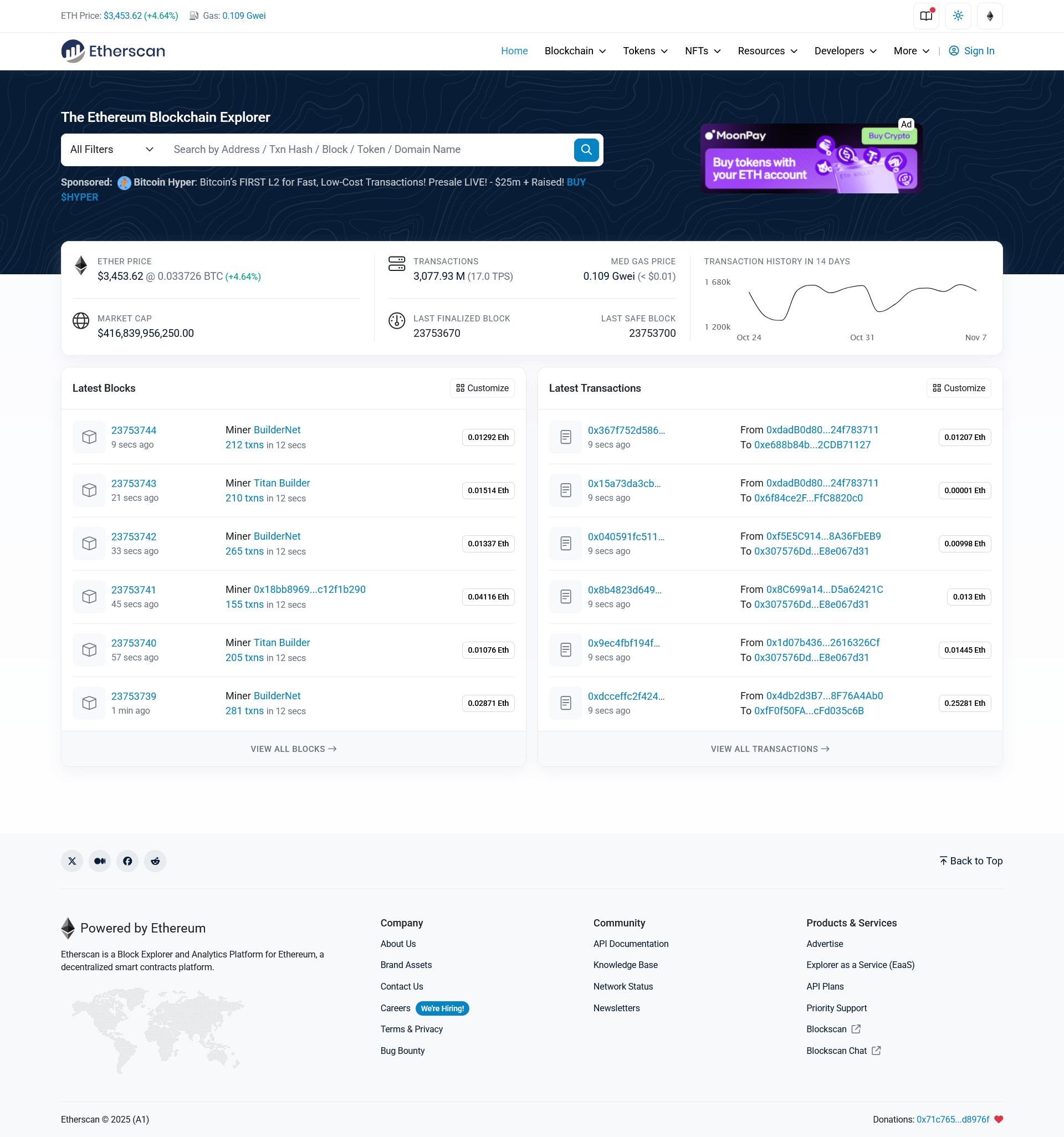
Etherscan: A Comprehensive Guide to Ethereum’s Blockchain Explorer :-
Etherscan is one of the most widely used blockchain explorers in the cryptocurrency ecosystem. Designed specifically for the Ethereum network, Etherscan allows users to view, track, and analyze transactions, smart contracts, wallets, tokens, and network activity in real time. While it is not a wallet or an exchange, it plays a critical role in transparency, trust, and usability within the Ethereum blockchain.
What Is Etherscan ?
Etherscan is a blockchain explorer and analytics platform for Ethereum. It provides a user-friendly interface that reads data directly from the Ethereum blockchain and presents it in a searchable, understandable format. Because blockchain data is public but highly technical, Etherscan acts as a bridge between raw on-chain data and everyday users, developers, and investors.
Launched in 2015, Etherscan has become the go-to tool for verifying transactions, inspecting smart contracts, and monitoring token activity on Ethereum and Ethereum-compatible networks.
Key Features of Etherscan :-
1. Transaction Tracking ;
One of Etherscan’s most common uses is tracking Ethereum transactions. By entering a transaction hash (TXID), users can see:
. Sender and recipient addresses
. Amount transferred
. Gas fees paid
. Block confirmation status
. Timestamp
This is especially useful for confirming whether a transaction has been completed or is still pending.
2. Address and Wallet Analysis :-
Etherscan allows users to look up any Ethereum address and view:
. ETH balance
. Token holdings (ERC-20, ERC-721, ERC-1155)
. Transaction history
. Interactions with smart contracts
This transparency is a fundamental feature of public blockchains and is often used for auditing, research, and due diligence.
3. Token Explorer :-
Etherscan lists thousands of Ethereum-based tokens, including:
. ERC-20 fungible tokens
. NFTs (ERC-721 and ERC-1155)
Each token page includes supply data, holder distribution, transfer history, and contract details. This helps users assess token legitimacy and avoid scams.
4. Smart Contract Interaction and Verification :-
Developers can upload and verify smart contract source code on Etherscan. Verified contracts allow users to:
. Read contract logic
. Interact directly with contract functions
. Confirm that deployed code matches published code
This is crucial for transparency and security in decentralized finance (DeFi) and NFT projects.
5. Gas Tracker :-
Ethereum transaction fees vary depending on network congestion. Etherscan’s Gas Tracker shows real-time gas prices, helping users choose appropriate fees and avoid overpaying during peak usage.
6. Network Statistics and Analytics :-
Etherscan provides insights into:
. Block times
. Network difficulty
. Hash rate
. Daily transaction volume
These metrics are useful for analysts, developers, and researchers studying Ethereum’s performance and adoption.
Why Etherscan Is Important ;
Transparency and Trust ;-
Because Ethereum is decentralized, there is no central authority to verify transactions. Etherscan enables anyone to independently confirm blockchain activity, reinforcing trust in the system.
Security and Scam Prevention ;
Users often rely on Etherscan to:
. Verify contract addresses
. Identify suspicious transactions
. Check token authenticity
Being able to inspect on-chain data helps reduce the risk of fraud and phishing attacks.
Developer and Ecosystem Support ;
Etherscan is widely integrated into wallets, DeFi platforms, and NFT marketplaces. Its APIs allow developers to fetch blockchain data for applications, dashboards, and analytics tools.
Is Etherscan Free to Use? ;
Yes, Etherscan is free for most users. Advanced features, high-volume API access, and professional tools are available through paid plans, primarily targeted at developers and enterprises.
Etherscan vs. Other Blockchain Explorers :-
While Etherscan is Ethereum-focused, similar explorers exist for other networks, such as:
. Blockchain.com for Bitcoin
. Solscan for Solana
. BscScan for Binance Smart Chain
In fact, many of these explorers are built using the same underlying architecture as Etherscan, highlighting its influence across the blockchain industry.
Common Misconceptions About Etherscan :-
. Etherscan does not store cryptocurrency: It is not a wallet.
. Etherscan cannot reverse transactions: Blockchain transactions are irreversible.
. Etherscan does not control Ethereum: It only displays public blockchain data.
Conclusion
Etherscan is an essential tool for anyone interacting with the Ethereum blockchain. Whether you are a beginner checking your first ETH transaction, a trader analyzing token movements, or a developer auditing smart contracts, Etherscan provides transparency, reliability, and deep insight into the Ethereum ecosystem. As Ethereum continues to evolve, Etherscan remains a foundational pillar supporting accessibility and trust in decentralized technology.